How to Choose the Right Lock Forming Machine for Your Business?
Choosing the right lock forming machine can significantly impact your business's efficiency and productivity. James Carter, an expert in the lock forming industry, once noted, "The right machinery can elevate your production quality and speed." In today's competitive market, selecting the best equipment is crucial.
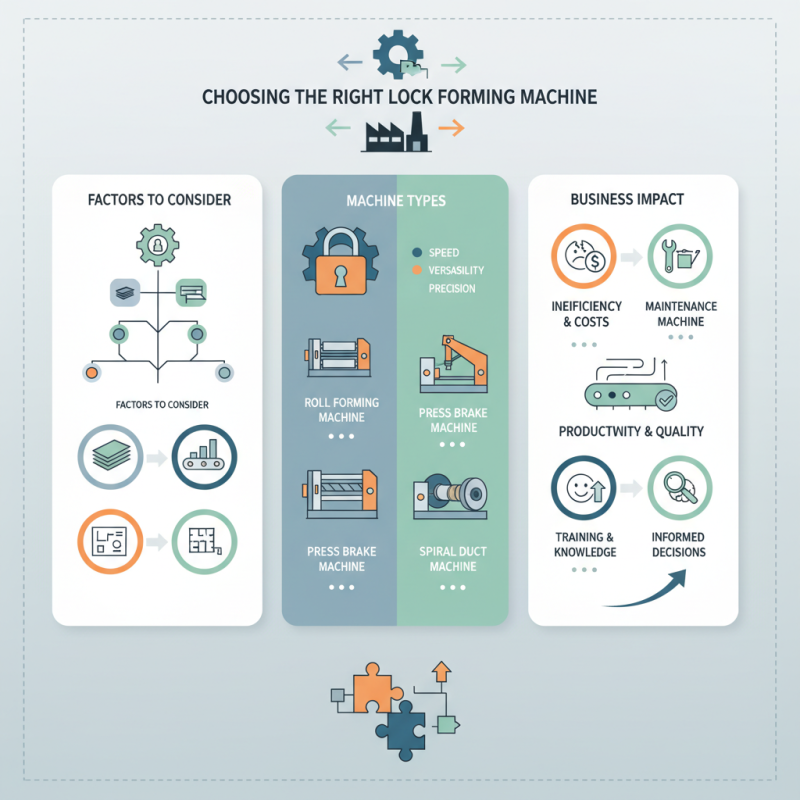
Many aspects influence your decision. Factors like materials, production volume, and space constraints must be considered. Each lock forming machine offers unique features. It's easy to feel overwhelmed by choices. An ill-suited machine may lead to production delays and increased costs.
Furthermore, regular maintenance and training are essential. An expensive machine may seem appealing, but it might not fit your needs. Continuous learning in this industry can lead to better decisions. With the right research and guidance, businesses can avoid costly mistakes and improve their operational capacity.
Factors to Consider When Choosing a Lock Forming Machine
Choosing a lock forming machine for your business can feel overwhelming. Many factors should influence your decision. Consider the machine's build quality. A robust, durable machine typically delivers better performance. Look for materials that endure heavy use.
Evaluate the range of lock types. Can the machine produce the locks you need? If it is limited, you may face production issues. Think about the machine's speed as well. Faster production can boost your efficiency. Yet, too much speed might compromise quality.
Don't forget about maintenance. Some machines are easier to service than others. Consider your team's technical skills. A complex machine may require specialized knowledge. Reflect on your floor space as well. A larger machine needs more room, but it could offer better capacity. Make sure it fits well within your workshop layout.
Understanding Different Types of Lock Forming Machines Available
Lock forming machines are essential for various industries. They help produce high-quality metal components. Understanding the different types is crucial. Some machines focus on speed. Others prioritize precision.
One type is the single-head lock forming machine. It's suitable for smaller operations. It offers flexibility and is easy to operate. Another is the multi-head lock forming machine. This type is designed for larger production runs. It ensures uniformity and minimizes waste. Also, consider custom machines. They are tailored for specific needs.
Tips: Analyze your production scale before choosing. A smaller scale may not need multi-head machines. Also, think about maintenance. Some machines require more upkeep than others.
Evaluate the space you have as well. It's easy to overlook the layout of your workshop. A machine that fits perfectly can enhance efficiency. Take time to understand each option carefully. Choices should reflect your business goals. Don't rush this decision; it can impact your operations.
Key Technical Specifications That Impact Performance and Efficiency
When selecting a lock forming machine, technical specifications play a crucial role. Key factors include forming speed, material thickness, and overall accuracy. A recent industry report shows that machines with higher forming speeds can increase production output by 30%. Fast processing translates to less downtime and greater efficiency.
Material thickness is another critical factor. Machines that can accommodate various thicknesses provide flexibility. This adaptability is essential for businesses aiming to serve different markets. For example, machines capable of handling thicknesses ranging from 0.5 mm to 2.5 mm can cater to diverse applications. However, thicker materials may require adjustments and could slow production if not managed efficiently.
Accuracy impacts the final product quality. Machines offering a tolerance of ±0.1 mm are considered industry standard. A report from an industry analyst emphasizes that even slight inaccuracies can result in wasted materials and increased costs. Businesses must weigh the cost of precision against potential losses due to errors. This aspect requires careful consideration and sometimes reevaluation of operational goals.
How to Choose the Right Lock Forming Machine for Your Business
This chart compares key technical specifications of three hypothetical lock forming machines: their speed, power, weight, and price. These factors are crucial in selecting the right machine for your business needs.
Analyzing Cost vs. Value in Lock Forming Machine Investment
When investing in a lock forming machine, understanding the cost versus value is crucial. The initial purchase price can be daunting. However, this machine could significantly enhance production efficiency. Industry reports indicate that businesses can experience a 30% increase in output by using advanced lock forming technology. This potential boost often justifies the upfront cost.
Yet, cost isn't the only factor to consider. Maintenance and operation expenses also matter. A cheaper model may require more frequent repairs, leading to higher long-term costs. Research suggests that companies often overlook these ongoing expenses. In fact, 40% of manufacturers reported exceeding their budget on maintenance annually. Assessing the total cost of ownership helps avoid pitfalls in decision-making.
Quality and features are equally significant. Some machines offer automation capabilities that reduce labor costs. Automation might come with a higher price tag initially. Yet, schedules can be streamlined, saving hours of manual work. This trade-off requires careful reflection on specific business needs and expected outcomes. Each business's situation is unique, making general recommendations challenging.
How to Choose the Right Lock Forming Machine for Your Business? - Analyzing Cost vs. Value in Lock Forming Machine Investment
| Machine Type |
Initial Cost ($) |
Annual Maintenance Cost ($) |
Production Capacity (units/hour) |
Warranty Period (years) |
Value Rating (1-10) |
| Basic Lock Forming Machine |
$15,000 |
$1,200 |
50 |
2 |
6 |
| Standard Lock Forming Machine |
$25,000 |
$1,800 |
75 |
3 |
8 |
| Advanced Lock Forming Machine |
40,000 |
$2,500 |
100 |
5 |
9 |
| High-Speed Lock Forming Machine |
$60,000 |
$3,000 |
150 |
7 |
10 |