Top 10 Benefits of Pipe Roll Forming Machines for Your Business?
In the realm of metal manufacturing, the pipe roll forming machine stands out as a transformative tool. According to a report by Smithers, the global roll forming market is projected to reach $7.2 billion by 2024. This growth signals a robust demand for machinery that enhances production efficiency. Pipe roll forming machines are at the forefront of this trend, operating with precision and speed.
These machines enable continuous production of high-quality pipes, reducing waste significantly. A study from MarketsandMarkets indicated that companies optimizing their manufacturing processes see productivity increases by up to 30%. However, the implementation of such technology is not without challenges. Businesses must consider initial costs and maintenance. They must also adapt to technological advancements quickly, as the industry evolves.
Investing in a pipe roll forming machine can bolster competitiveness. Companies that harness this technology often gain a significant edge in both cost-efficiency and product consistency. Reflecting on these factors is vital. As industries expand, adapting to new machinery like pipe roll forming machines becomes imperative for sustained growth.
Advantages of Enhanced Precision in Pipe Manufacturing Processes
The precision offered by pipe roll forming machines transforms pipe manufacturing processes. Enhanced accuracy reduces errors during production. This leads to
better product quality and lowers material waste. With precise dimensions, manufacturers can meet strict industry standards effortlessly. Consistent results improve customer satisfaction and foster loyalty.
Tips: Regular maintenance of your roll forming equipment helps maintain precision. Check settings often to ensure they align with specifications. Consistency is key in precision manufacturing, so keep a log of adjustments.
The use of advanced technology in forming processes enhances efficiency. Automated systems allow for quick adjustments, reducing downtime. However, operators need training to handle these technologies effectively. Different materials may behave differently, requiring trial and error to achieve perfection. Balancing technology with skilled labor can be challenging but pays off.
Tips: Implement regular training sessions for staff. Encourage open discussions about challenges faced in production. Learning from mistakes can lead to improvements and greater precision in future projects.
Increased Production Efficiency through Automation in Roll Forming
Pipe roll forming machines significantly enhance production efficiency through automation. These machines streamline the manufacturing process, reducing manual labor and minimizing errors. With automated systems, operators can focus on monitoring rather than performing repetitive tasks. This not only speeds up production but also improves the quality of the final products.
To truly benefit from automation, it's crucial to have a proper setup. Ensure that your workflow is organized to maximize the use of these machines. Regular maintenance is essential; neglecting this can lead to unexpected downtimes. Remember, even the best machines require care to perform at their best.
Implementing automation can be an adjustment. Workers may need time to adapt to new processes. Training is vital for a smooth transition. Engage with staff during this change. Often, they have valuable insights into how processes can be improved. Listening to their feedback can help in refining the operational efficiency of the automated systems.
Top 10 Benefits of Pipe Roll Forming Machines for Your Business
This chart illustrates the top 10 benefits of using pipe roll forming machines in business, highlighting the ratings of each benefit based on their impact on production efficiency and overall operations.
Cost Reduction Strategies with Pipe Roll Forming Machines
Pipe roll forming machines offer significant cost reduction opportunities for businesses. These machines streamline the manufacturing process. Instead of traditional methods, which can be labor-intensive, roll forming automates much of the work. This leads to fewer hours needed for production. Labor costs decrease, and output quality increases.
Moreover, the efficiency of pipe roll forming machines allows for the use of less material waste. By precisely shaping metal into pipes, companies can ensure that every piece is utilized effectively. This minimizes scrap and lowers the overall cost of raw materials. It's essential to regularly assess machine settings to avoid production flaws. Continuous monitoring can help in identifying inefficiencies or potential problems early on.
Investing in these machines may seem costly initially. However, businesses must consider long-term savings. Maintenance is crucial for optimal performance. Neglecting it might lead to expensive repairs or downtimes. Balancing initial costs with future savings requires careful thought. Small adjustments in routine practices can yield significant savings over time. It's a journey of enhancing productivity while reflecting on ongoing adjustments.
Flexibility in Design and Customization for Various Applications
In today's competitive manufacturing landscape, flexibility in design is crucial. Pipe roll forming machines offer remarkable adaptability, allowing businesses to create diverse products. This flexibility caters to various applications, from construction to automotive parts. Manufacturers can easily adjust the design specifications based on unique client needs.
Customization comes easy with these machines. Users can switch profiles and dimensions quickly. This ability helps to meet different market demands while reducing lead times. However, it's essential to monitor changes carefully. Rapid alterations can lead to errors or inconsistencies in quality. Finding the right balance between speed and quality is vital for long-term success.
Design variations also mean considering materials. Different substrates may behave unpredictably during forming. It’s a complex interplay that requires continuous testing. Some businesses may struggle to keep up with production rates. Adapting to client requests while maintaining efficiency presents ongoing challenges. These machines enable creativity, but they also demand a strategic approach to ensure reliability and excellence.
Improved Material Utilization and Waste Reduction in Production
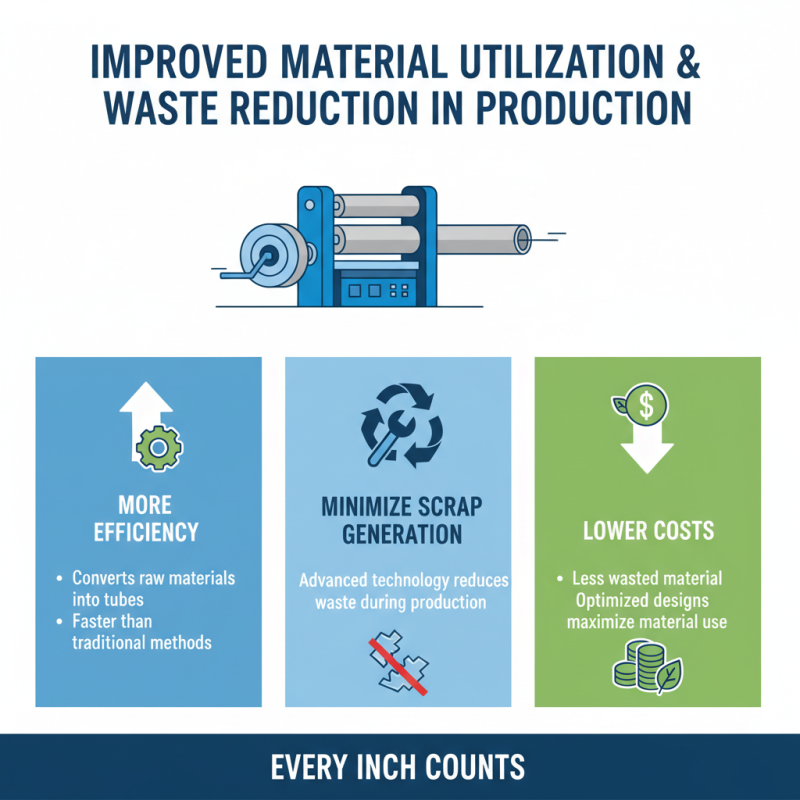
Pipe roll forming machines are revolutionizing the way businesses approach material utilization. These machines convert raw materials into tubes more efficiently than traditional methods. By using advanced technology, they can minimize scrap generation during the production process. For manufacturers, this means a reduction in wasted material and lower costs. Every inch of material counts in production, and optimized designs can significantly enhance this aspect.
The improved material utilization not only benefits the bottom line but also impacts sustainability efforts. Less waste contributes to a smaller environmental footprint. However, some companies struggle to fully adapt to these machines. They may find it challenging to refine their production processes. Training staff and adjusting workflows is necessary, yet it can be hard to implement changes effectively.
In many cases, businesses may overlook the importance of feedback loops for continuous improvement. While roll forming machines promise efficiency, not all processes are optimized immediately. Regular assessments and adjustments can help enhance performance. Embracing this mindset can lead to better waste management and increased profitability over time.