Top Benefits of Flow Forming Steel in Modern Manufacturing?
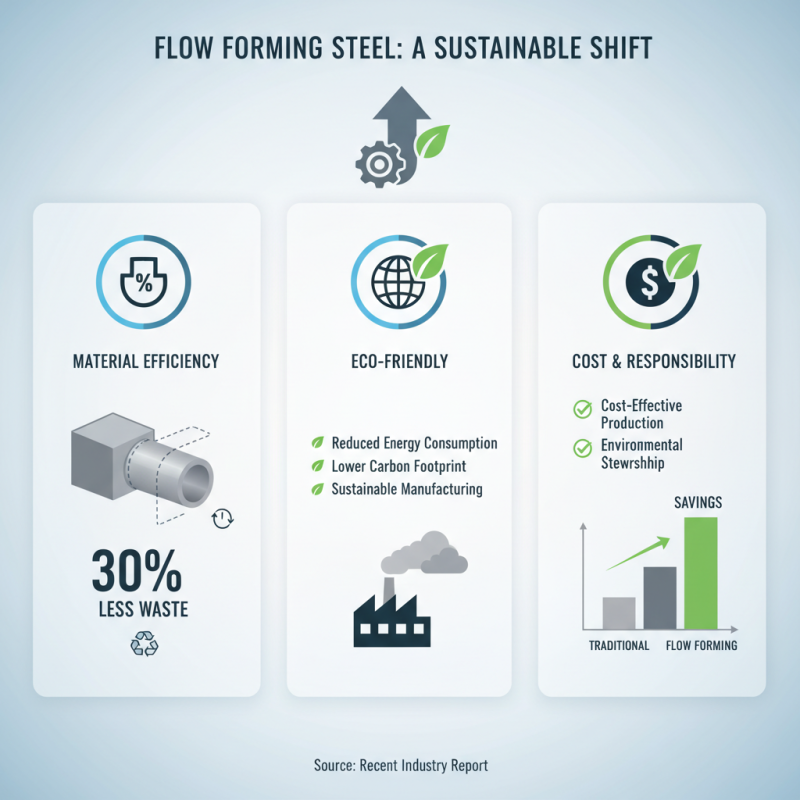
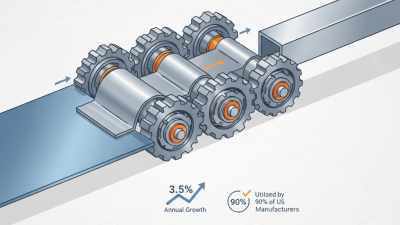
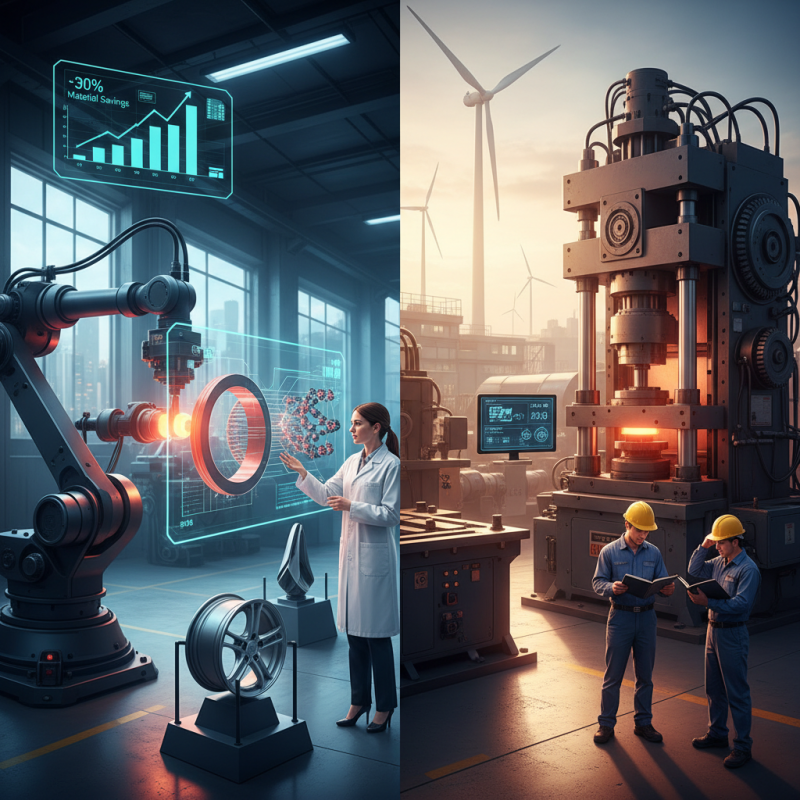
The rise of flow forming steel in modern manufacturing marks a significant shift in production methods. According to a recent report by the Manufacturing Technologies Association, adopting flow forming techniques can reduce material waste by up to 30%. This innovative process enhances the strength and durability of steel components, making them ideal for various industries, including automotive and aerospace.
Dr. Emily Carter, a leading expert in materials science, emphasizes the importance of flow forming steel in today's fast-paced manufacturing environment. She states, "Flow forming steel enables manufacturers to create complex shapes while maintaining material integrity." This capability is crucial as industries strive for both efficiency and sustainability.
Despite its benefits, challenges remain. The initial setup costs for flow forming equipment can be high. Moreover, finding skilled labor to operate these advanced machines is becoming increasingly difficult. As companies grapple with these issues, the potential for flow forming steel will continue to spark discussions about innovation in manufacturing.
Advantages of Flow Forming Steel in Contemporary Manufacturing Processes
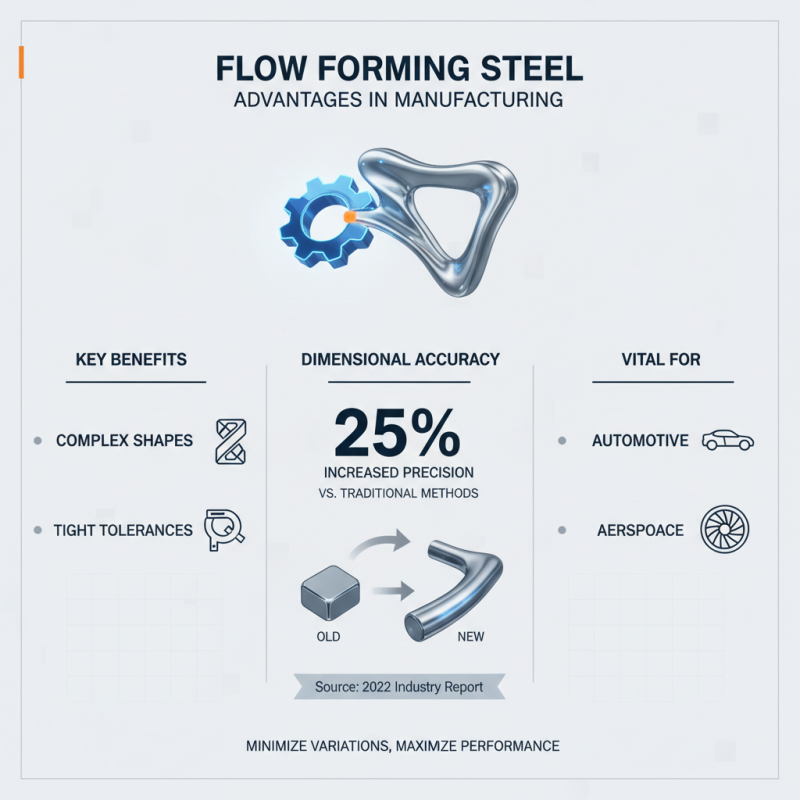
Flow forming steel offers numerous advantages in modern manufacturing processes. One significant benefit is its ability to produce complex shapes while maintaining tight tolerances. According to a 2022 industry report, flow forming can increase dimensional accuracy by approximately 25% compared to traditional methods. This precision is vital in sectors like automotive and aerospace, where even minute variations can lead to substantial performance issues.
Additionally, flow forming enhances material properties. The process aligns the material's grain structure, resulting in improved strength and durability. A study from 2021 indicated that components produced through flow forming exhibited up to 30% higher yield strength. This characteristic allows manufacturers to design lighter yet stronger products, contributing to overall energy efficiency.
However, challenges exist. The initial setup costs for flow forming equipment can be high. Not all materials are suitable for this technique, which might limit its application. Manufacturers must weigh these factors carefully. In a rapidly evolving market, balancing cost and quality is crucial. Embracing flow forming steel could redefine manufacturing dynamics, yet being overly reliant may pose risks.
Enhancing Material Properties through Flow Forming Techniques
Flow forming techniques offer significant enhancements to material properties essential in modern manufacturing. This process involves the deformation of metal into desired shapes through controlled flow. According to a recent industry report, flow forming can improve yield strength by up to 20%, making components more durable. This durability leads to longer product lifespans and reduced maintenance costs.
Another advantage is the ability to achieve precise geometries with a smooth surface finish. This precision reduces the need for additional machining, saving time and resources. Data from a manufacturing study indicated that companies using flow forming techniques reported a 15% reduction in production time. However, these benefits come with challenges, such as the need for specialized equipment and skilled operators. The initial investment may deter some manufacturers, despite the long-term savings.
Furthermore, while flow forming enhances properties like toughness and fatigue resistance, it may not be suitable for all materials. Some alloys could lose ductility during the process. This aspect should prompt further research and consideration before implementation. A balance between benefits and limitations is crucial for maximizing efficiency in manufacturing.
Top Benefits of Flow Forming Steel in Modern Manufacturing
| Benefits |
Description |
| Improved Strength |
Flow forming enhances the grain structure of steel, leading to improved tensile and yield strength. |
| Lightweight Design |
Allows for the production of thinner and lighter components without sacrificing strength, ideal for automotive and aerospace industries. |
| Cost-Effectiveness |
Reduces raw material waste and machining time, which can lower overall production costs. |
| Enhanced Fatigue Resistance |
The process creates a uniform microstructure that increases the material's ability to withstand repeated stress. |
| Versatility |
Suitable for various applications, including gears, wheels, and automotive components, making it a versatile manufacturing process. |
| Superior Surface Finish |
Flow forming often results in a smoother finish, reducing the need for additional machining operations. |
Cost Efficiency Benefits of Using Flow Formed Steel Products
Flow forming is transforming modern manufacturing, especially in cost efficiency. According to a report by the International Journal of Advanced Manufacturing Technology, flow formed steel can reduce material waste by up to 30%. This is significant in a market where sustainability is crucial. By minimizing waste, companies save on raw material costs and contribute to environmental efforts.
Moreover, flow forming helps in reducing production time. The process allows for greater precision in forming intricate shapes. It can create lightweight components that are stronger than traditional methods. A study from the Journal of Materials Science showed that flow formed steel parts can be up to 50% lighter. This means lower transportation costs and improved energy efficiency in applications like automotive and aerospace.
Despite these benefits, flow forming isn't without challenges. The initial setup can be expensive, and specialized machinery is required. This might deter small businesses or startups. Additionally, the learning curve for using this technology can lead to mistakes. It's crucial for manufacturers to weigh these factors against the long-term savings. Investing in training and proper equipment is essential for realizing the full potential of flow formed steel.
Applications of Flow Formed Steel in Various Industries
Flow formed steel is gaining popularity in various industries due to its unique properties. This method enhances strength and reduces weight, making it ideal for automotive and aerospace sectors. For example, flow formed components are often used in vehicle chassis and wheel designs. These components can withstand high stress while maintaining efficiency in fuel consumption.
In the manufacturing of machinery, flow formed steel provides precision and reliability. It is commonly seen in hydraulic cylinders and pipes, which require high durability. The method allows for complex shapes that are difficult to achieve with traditional processes. Yet, not all applications benefit equally. Some industries may find it challenging to adapt to new technologies, slowing down their potential.
Construction also utilizes flow formed steel for structural elements like beams and columns. This allows for lighter constructions that do not compromise safety. However, industries must continuously evaluate their practices to avoid the pitfalls of rapid adoption. The need for skilled labor to handle these advanced materials poses another challenge that cannot be overlooked.
Top Benefits of Flow Forming Steel in Modern Manufacturing
Flow forming steel provides numerous benefits in modern manufacturing, including material efficiency, weight reduction, cost-effectiveness, enhanced strength, and design flexibility. These advantages make it a preferred choice across various industries.